
Start a Waukee Residents Directory Search
A sharp lookup starts with the firmest fact already known, not a broad request for everything about someone. A full name belongs in a name index. An address belongs in parcel, GIS, or permit systems. An old date points toward newspapers, county microfilm, and local-history shelves. Write down the spelling. Note the date and the office too. Knowing what a field means prevents confusion, since an owner's mailing address is not the same thing as an occupied home.
- Choose the lead clue. Use a name, address, parcel number, business connection, or time period.
- Open the matching official source. Try the city document repository, Dallas County portal, or Iowa database built for that record.
- Anchor the result in time. Save the filing date, assessment year, election status, issue date, or publication date.
- Compare a second source. Match a name with an address, document, or other dated fact before drawing a conclusion.
- Use the custodian fallback. Ask for a narrow existing record when an online index lacks the needed detail.
Record language matters. A roll is an official list, an index points to a document, and a parcel is a mapped unit of land.
Names Inside Waukee's Civic Archive
Inside Waukee, the City Clerk acts as general custodian of city records. Police and fire files are the exception. Those sit with the chiefs. The city's Laserfiche public repository holds council agendas, packets, minutes, resolutions, ordinances, bids, audits, plans, budgets, reports, and news releases. Search a full name plus a date. A hit proves only civic presence. It is not a current Waukee resident entry. A missing document still has routes. Waukee accepts requests in person, in writing, by phone, or electronically, and the general form asks for a record description, a preferred format, and delivery details. A dated packet, permit report, GIS extract, or named resolution is easier to locate than an open-ended person search. Police reports use a separate form with incident, location, and date fields. The city allows ten business days. Fees are posted in the policy. Black-and-white copies run 25 cents a page, color 50 cents, and a CD or DVD $5. GIS work costs $10, with actual staff or professional-review cost after 30 minutes, and the online form lists a different USB amount than the policy, so confirm removable-media charges before ordering.
Offices Behind Waukee Resident Records
Waukee belongs to Dallas County, and many of its most useful files sit in Adel rather than at Waukee City Hall. The record type decides the custodian. These offices share no master roll. Keeping labels separate keeps a deed party, voter, litigant, or permit applicant from being described as something the source never claimed.
Dallas County Recorder
800 Court Street, Suite 130, Adel, IA 50003
515-993-5804
Dallas County Assessor
800 Court Street, Room 120, Adel, IA 50003
515-993-5802
Dallas County also runs a general open-records channel that accepts Chapter 22 requests. Retrieval, copying, and permitted review can involve actual costs. Name the department, the date range, and the existing record sought. Chapter 22 opens nonconfidential public records. But it never requires an office to build a new directory or perform research for a resident lookup.
Waukee Parcels Connect Streets to Owners
The best address bridge is Waukee's OpenGov ArcGIS service. Its Address Table and Parcels layers link house numbers and full addresses to parcel identifiers, legal descriptions, subdivisions, zoning, building details, and mapped context. The Dallas County tax search takes even more. It accepts a parcel number, owner, house number, street components, city, and unit fields. Together the two tools turn an address clue into a record trail. Neither claims the listed owner occupies the site.
| Field to try | Best use | Reading caution |
|---|---|---|
| Parcel number | Carry one property across tax, GIS, and deed work | Displayed separators can vary |
| Owner | Locate assessed property tied to a name | An entity or mailing recipient may appear |
| House number and street | Find one address or scan a named street | Use separate direction and suffix fields |
| City and unit | Narrow common streets or multi-unit sites | Postal city and city boundary differ |
The assessor values real property as of January 1 and Iowa ordinarily reassesses in odd years. Measurements, condition, improvements, square footage, and comparable sales shape that assessment. For the full address chain, including deed and permit links, use the Waukee street directory guide.
The Dallas County government home page routes questions to the correct county office.
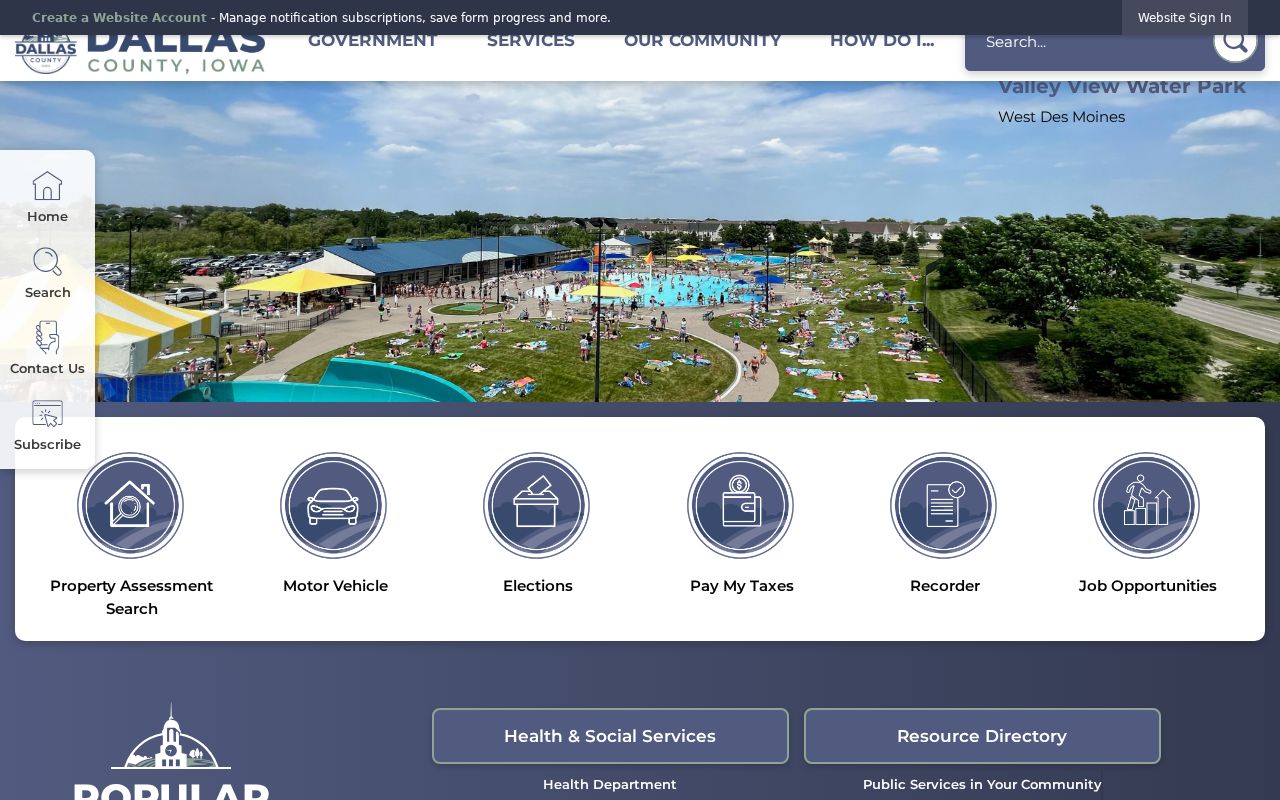
The county directory is the handoff point. It carries a Waukee clue to the recorder, assessor, elections staff, court, tax office, or county records channel.
Current Sources for a Waukee Residents Directory
No government source lists everyone living in Waukee. Current sources are narrower, with different update schedules and access rules. Pick the roll whose purpose matches the question. Then verify an apparent match against a second dated record, whether a parcel entry or another roll.
| Source | What a result can establish | Access route |
|---|---|---|
| Waukee Laserfiche | A name appears in a city document | Free repository or City Clerk request |
| Property and GIS systems | Assessment, owner, parcel, address, and map context | ArcGIS, county tax search, assessor help |
| Iowa voter lookup | The searcher's registration and polling information | First name, last name, and ZIP |
| Iowa Courts Online | Public case parties, events, dates, and court location | Free index, terminal, or clerk |
| Role-specific systems | A public license, commission, or entity connection | Separate Iowa agency databases |
Commercial people-finder sites blend old addresses and republished data. Source dates are rarely clear. Official rolls are narrower, but they name the custodian, explain the record, permit corrections, and should never be used to intrude on another person.
Lawful personal use only. Never use address or name records to stalk, harass, intimidate, or evade protected-address safeguards.
Waukee Voter Tools Answer One Narrow Question
The Iowa statewide registration lookup asks for a first name, a last name, and a ZIP code. It answers one question only: whether a person is registered and where that person votes. It never returns a neighborhood roll or a street list. That makes it unlike a Waukee residents directory. Polling places also shift between elections. Dallas County reports 46 precincts that share 39 locations, so an old card can mislead. Run the lookup shortly before an election instead.
Voter-list requests move through a separate channel under Iowa Code sections 48A.38 and 48A.39. The state lets a requester pick jurisdiction, status, and format. It usually prepares a list within 14 days. It strips certain identifiers. Use is confined to voting, genuine political, official, or bona fide political-research purposes. Those purpose limits are strict for good reason. A regulated voter file is not a general resident lookup tool. The law keeps it that way.
The Iowa voter registration lookup displays the required search fields.
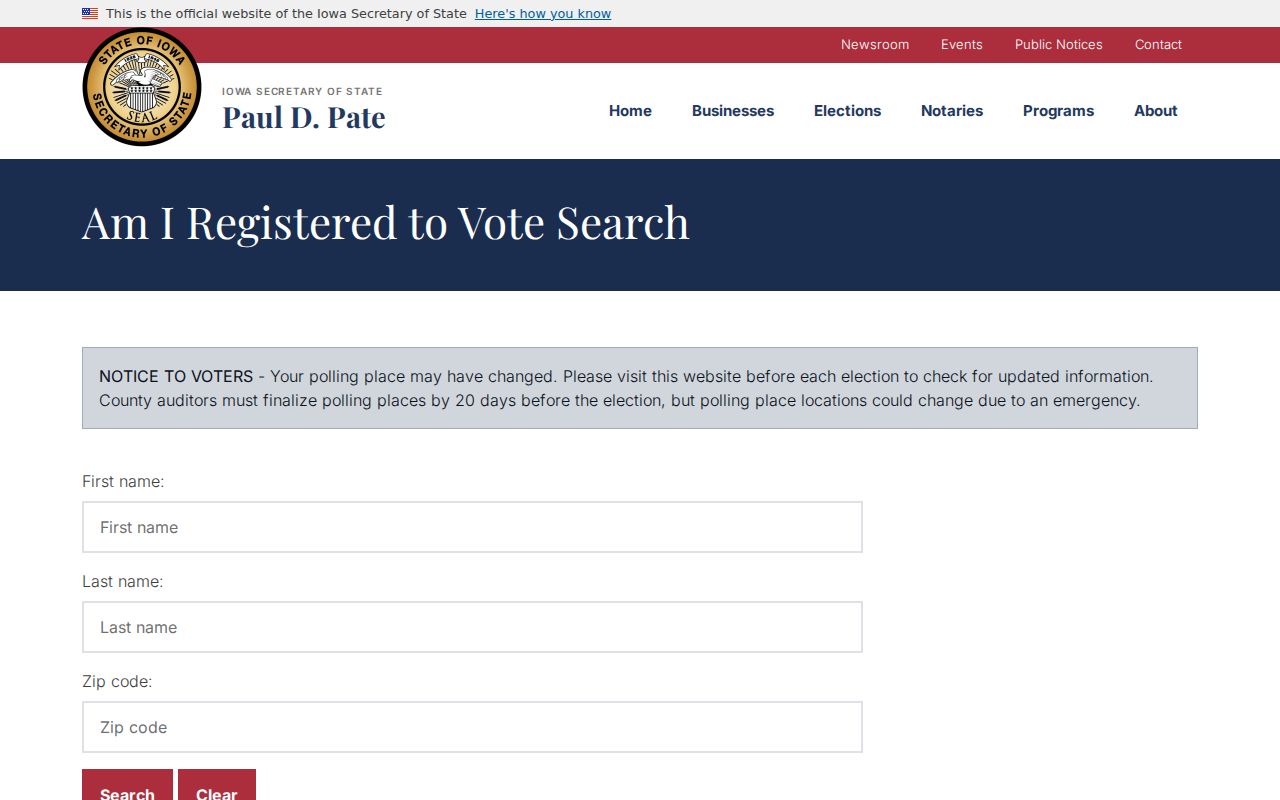
Its output stays anchored to registration and polling rather than a broad personal profile.
Iowa Courts Adds Dated Waukee Name Evidence
Iowa Courts Online is a free statewide index of public cases. Search a name and you may see a case ID, party, case type, court location, filing details, dates, and public docket events. The help material sets the ground rules: a last or firm name needs at least two letters, the percent sign works as a wildcard, and extra fields can narrow results. Start exact. If the spelling is uncertain, try a careful wildcard or a court filter.
A case-party match is only a lead. It proves nothing about guilt, character, or Waukee residence. Compare the name, court, date, and case type before drawing anything from it, and pull the actual public document from a courthouse terminal or clerk when the free view is too thin. One caution deserves notice. Dallas County sources publish conflicting Clerk of Court phone numbers, so verify the current one through the Iowa Courts directory.
The Iowa Courts public case search is the statewide starting screen.
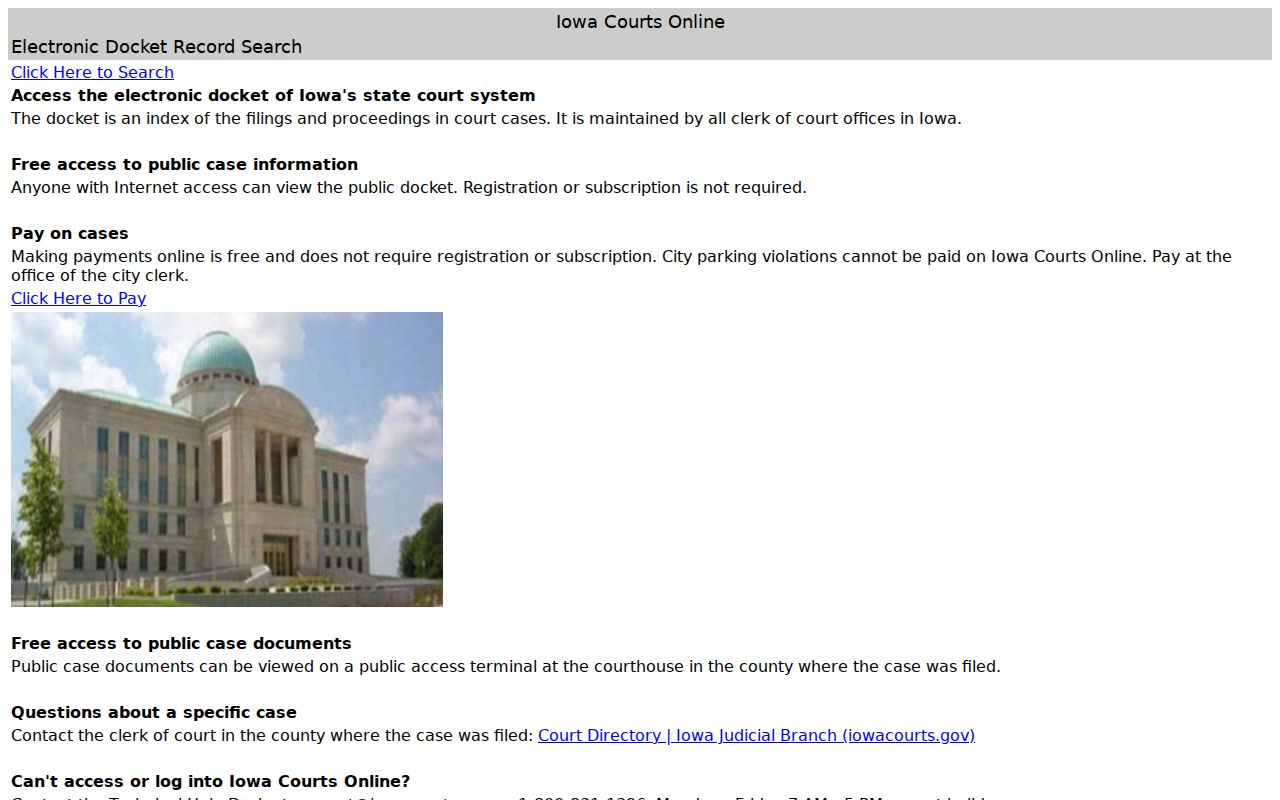
Docket details point to a case, and document review plus identity checks should follow.
Waukee Names in Specialized Iowa Indexes
Some lookups get sharper when narrowed to a public role. Iowa's professional license portal filters by board, status, or company. It also searches by full name, city, state, ZIP, and license number. The notary search returns commission details, place, language, status, and electronic or remote indicators. The Secretary of State business search accepts an entity name or a full business number. It can lead to filings, addresses, prior names, agents, officers, directors, and trademarks.
Treat these as role directories, not residence proof. A business filing may list a registered office or agent address. A professional result shows licensing facts. A notary result describes a commission and nothing more. Label each fact with its source and status. Folding all three into a Waukee resident profile would stretch the records beyond what they support.
The Iowa business entity search is the official name-or-number route.
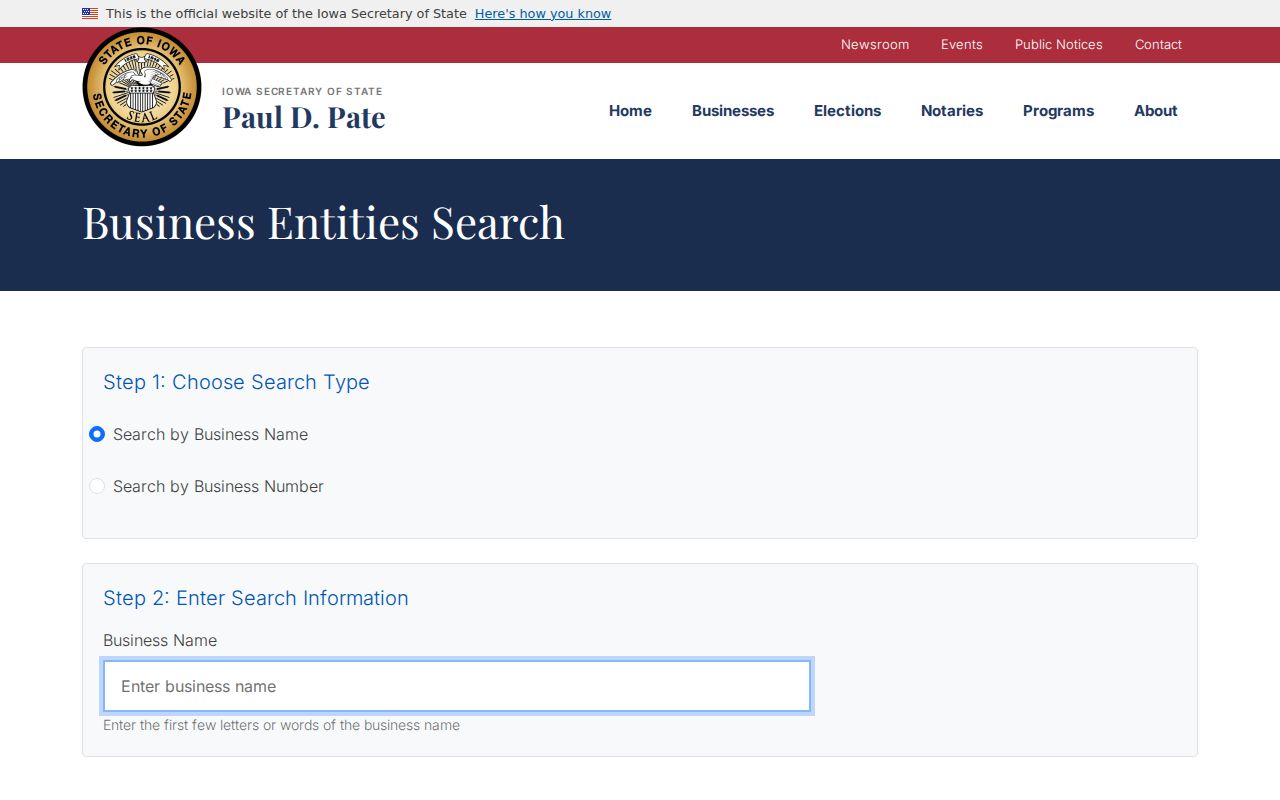
Results cap at 1,000 entries. A fuller business name or an entity number yields a cleaner set.
Public-Safety Records Need Extra Care in Waukee
Dallas County's inmate inquiry searches current custody data by name, subject number, booking number, booking dates, status, and facility. The Iowa Department of Corrections search covers state custody. It is updated weekly. The Iowa Sex Offender Registry gives the public name, city, county, ZIP, map, radius, and notification searches. Updates run hourly on weekdays.
Every one of these sources carries a limit that matters. Arrest is not a finding of guilt. Jail information can be incomplete. Corrections data comes with update and conversion cautions. Registry information exists for lawful public-safety use. It must never support harassment. Confirm a court disposition in Iowa Courts. Never stretch a booking or custody entry into a claim the record cannot carry.
The Iowa DOC Offender Search publishes its fields and warning.
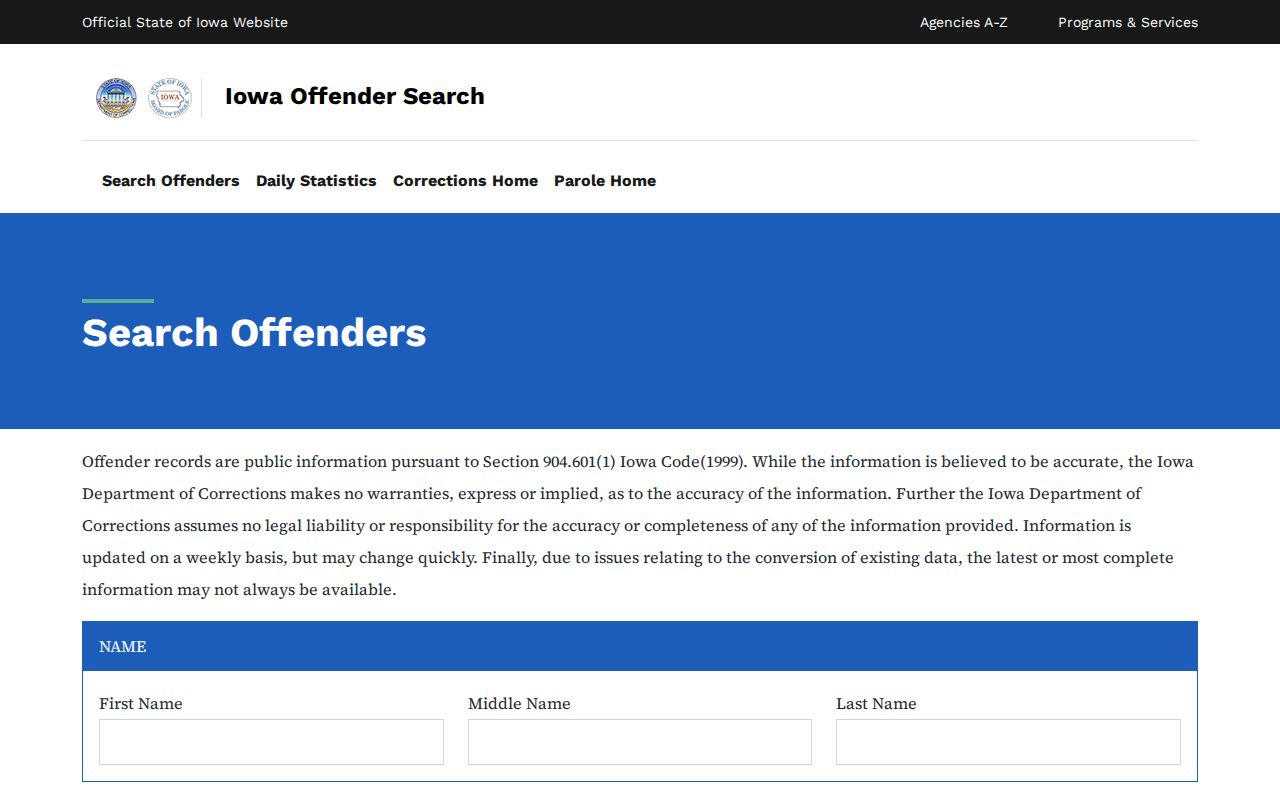
This index belongs in a verification chain only when the purpose and the person match both hold up.
Historical Threads in the Waukee Residents Directory
Waukee's historical shelf runs deeper than a single run of printed city directories. The Waukee Public Library links HeritageQuest and the Iowa Heritage Digital Collections. It also links Dallas County newspapers beginning in 1866, plus Perry newspapers beginning in 1874. Its local-history work also spans photographs and oral histories. It includes the Coal Mine Museum and the Hal Manders Museum. The Waukee Area Historical Society adds artifacts and stories rooted in railroad history. Its collections also cover coal-mining and agricultural history.
No official Waukee library page identifies a complete Waukee-only directory or reverse-directory year run. That gap should stay visible. Researchers can combine newspapers, census material, county records, regional directories, deeds, probate files, and current GIS. What they should not do is invent a missing volume or assume a regional book covered every Waukee household.
The Waukee Public Library is the local start for catalog and access help.

When no printed directory answers the question, staff can help identify a newspaper, database, museum item, or loan route.
Why Waukee Records Often Lead to Adel
Waukee sits inside Dallas County, and that fact shapes nearly every records search. The county dates to 1847. Adel won the county seat after some early rivalry. Its Bedford-stone courthouse has stood since 1902. So a Waukee clue often starts close to home. It often ends at a county office in Adel, where deeds, assessments, vital records, court files, and election rolls are kept. The Waukee residents directory points that way for a reason.
There is a second layer worth knowing. The State Historical Society of Iowa holds Dallas County birth, marriage, death, probate, naturalization, and land series. Each series has its own date span. Those collections sit apart from the active county offices. Research visits, reference requests, and interlibrary loan are three separate channels. The loan program ships newspapers, census material, maps, and Civil War lists to a local library for $6 a transaction. Paid reference work runs on its own scope and timeline.
The pattern is simple. Begin with the current custodian of the record. A date may cross from an active series into archival material. Then move on to the county or state repository.